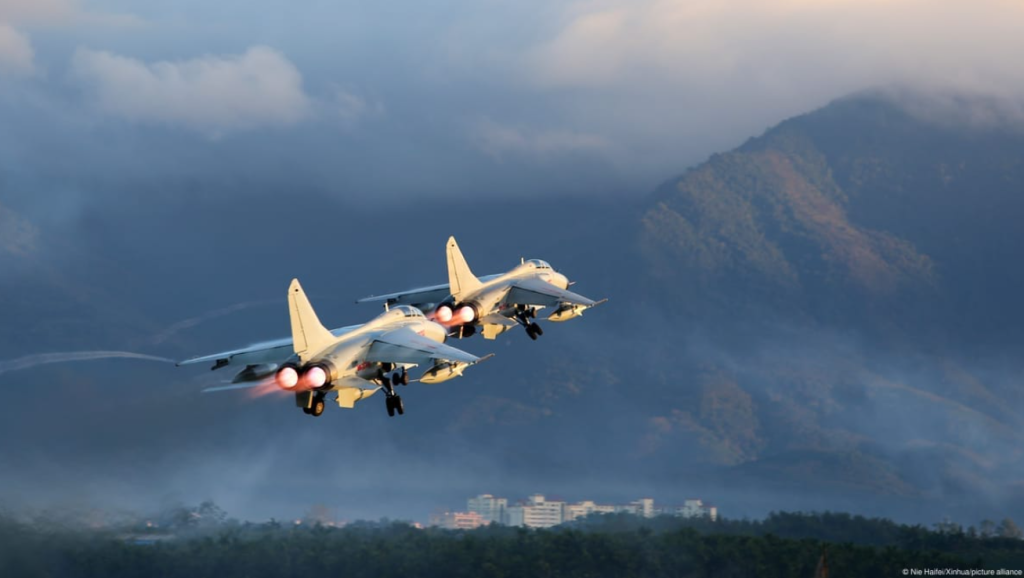
China intensified military pressure around Taiwan on November 28, the day of local elections, by deploying 30 fighter jets near the island and conducting amphibious landing exercises in Fujian province. The Chinese Ministry of Defense claimed its forces would better protect Taiwan’s civilians, while Beijing insists reunification remains a non-negotiable goal. The elections—voting for mayors and city heads—focused on housing costs, public transport, urban renewal, and healthcare, with no direct link to cross-strait tensions. Satellite imagery revealed tens of thousands of civilian vessels linked in formations resembling amphibious landing structures, raising concerns about potential invasion preparations. Beijing called the drills "legitimate," but analysts view them as a show of force ahead of a possible conflict. Taiwan’s 19.7 million voters (out of 23 million) elected officials amid heightened tensions. In 2020, the opposition Kuomintang (KMT) won 14 local seats, while the ruling Democratic Progressive Party (DPP) secured five. The DPP’s 2024 presidential candidate, Lai Ching-te, is seen by Beijing as a separatist provoking war. In Taipei, DPP candidate Puma Shen, a lawmaker and former criminology professor, emphasized daily concerns like housing affordability and urban renewal. Incumbent KMT mayor Chiang Wan-an has prioritized similar issues since 2022. Global attention also turns to Taiwan’s status during the G20 summit in Miami, where U.S. President Donald Trump will meet Chinese leader Xi Jinping. Trump has yet to confirm whether he will approve a $14 billion arms package critical to Taiwan’s defense.
Source: orainfo.net